We started as AI consultants. We build agents for a living — workflow automation, LLM orchestration, the full stack. Every day we're shipping agentic systems for other people's businesses.
The problem was we didn't have our own.
The first idea was obvious: an agent that builds other agents. A meta-platform. We started scoping it and quickly realised everyone else was building the same thing. It was too broad, too horizontal, and the market was already crowded with well-funded players racing to the same generic layer.
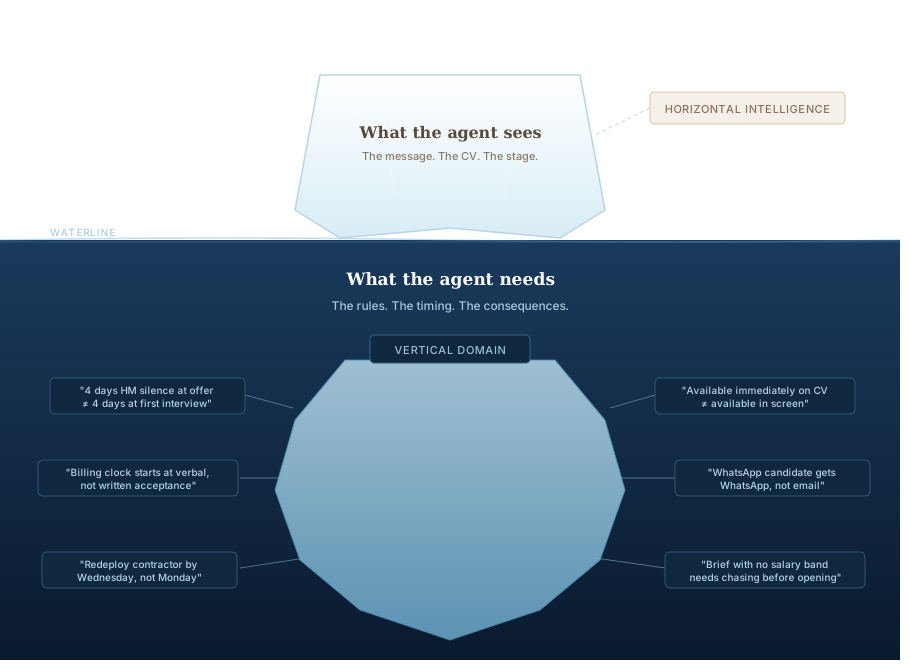
So we made a decision. Pick one industry. Go deep. Understand the workflows, the language, the pain, the money. Build something so specific to that vertical that a horizontal tool could never replicate it. Being close to the industry is the only way to prove you're adding real value — you can't agentify what you don't understand.
But which industry?
— We didn't have to look far. The answer had been sitting in our inboxes the entire time.
Recruiters. As consultants, we talk to recruiters every single day. They contact us. We contact them. We sit in their pipelines. We get their follow-up emails, their screening calls, their "just checking in" messages. We've been candidates in their systems for years.
And once we started paying attention, we noticed something: they all do the same thing. The same intake questions. The same follow-up cadence. The same Monday pipeline review. The same Tuesday chase to the hiring manager who's gone silent. The same Friday scramble to update the ATS before the weekend.
— Every recruiter we spoke to described the same five problems —
- 01Briefs come in messy and incomplete.
- 02Screening is manual and repetitive.
- 03The pipeline goes dark when nobody chases.
- 04Outreach gets no replies because it's sent on the wrong channel.
- 05Compliance is an afterthought until something breaks.
The process is standardised. The tools aren't.
We'd been gathering market research on recruitment without knowing it. Every time a recruiter logged us in their ATS, every time they sent us a templated InMail, every time they asked "are you still available?" — we were watching the workflow from the inside.
And then something clicked.
The meta-agent work wasn't wasted. The orchestration layer we'd been building — the router that decides which sub-agent handles a task, the planner that breaks a goal into steps, the state machine that tracks where a workflow is — that was exactly what a recruiting desk needed.
A recruiter's day isn't one job. It's five jobs happening simultaneously. A message comes in and it could be a new brief from a client, a candidate asking about interview times, a hiring manager finally replying with feedback, or a dormant candidate resurfacing. The recruiter has to mentally route each one to the right context, switch modes, and act.
That's an orchestration problem.
So we took the meta-agent architecture and pointed it at a recruiting desk. One router at the centre that reads every incoming message and decides: is this Intake? Screening? Pipeline? Outreach? Compliance? Each function became its own agent with its own rules of engagement — how it reads context, what it's allowed to do, when it escalates back to the human.
The intake agent knows how to structure a brief. The screening agent knows how to score a CV against a role. The pipeline agent knows when a deal is stalling. The outreach agent knows which channel to use and what tone to strike. The compliance agent knows what needs to be logged and what needs to be deleted.
One message in. The router decides. The right agent acts. The recruiter approves.
That's the desk. That's Hamrr.